
Six reasons why MFL teachers are absolutely brilliant!
Oct 15, 2026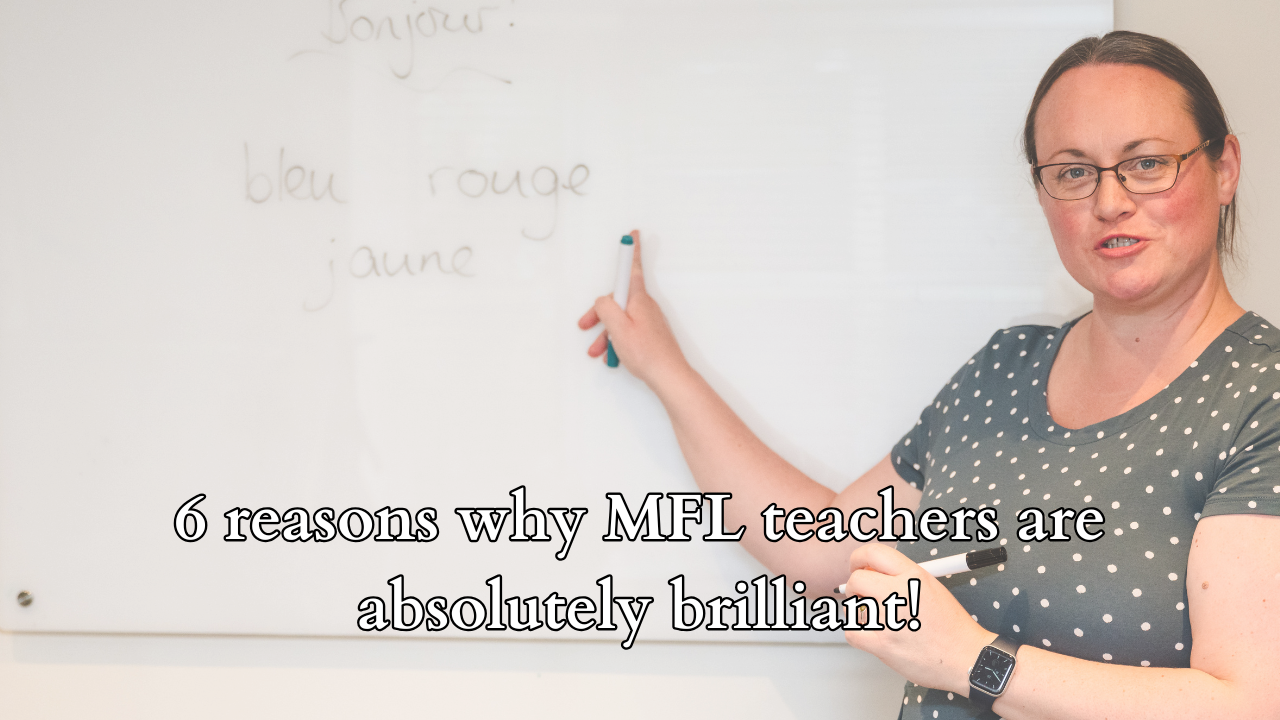
Recently, I’ve focused a lot on giving MFL teachers advice on what NOT to do in the French, German and Spanish GCSE speaking exams.
So for this blog post I’ve decided to be a bit more positive and talk about what you as MFL teachers are doing brilliantly...
I mean, aside from the fact that you are thriving in a post-Brexit world where recruitment of teachers from the EU has become almost impossible; and aside from the fact that you are still fighting for a subject that was recently described by the TES as being in a "death spiral"; and aside from the fact that university languages departments in England and Wales are closing down faster than Richard E Grant declaring himself to be a traitor…
You are still here! And you are doing an amazing job with the new spec GCSEs. And here are 6 reasons why…
1. You have learnt yet another specification. If you’ve been teaching for anywhere near as long as I have, this is probably at least your 4th spec, and for some of you, I imagine it could be your 5th or even 6th. When this new exam was first announced, I genuinely questioned for a while whether I could be bothered to learn what it entails, and make appropriate resources for it… but seeing your resilience and grit in the face of yet another spec change made me equally determined not to give up. So yay to us and congratulations for still being here!
2. In the 2026 exam series, students generally did really well across all papers, foundation and higher. In some ways, they did too well, which is why the grade boundaries were so high 🫣 but this is evidence that they were really well-prepared for the exams as a whole.
3. The vast majority of students were entered for the correct tier and excelled at that tier. This is always such a minefield, and so stressful for MFL teachers. Yes, there were a number of U's in the higher tier, which are absolutely heartbreaking and will need addressing, but for a huge proportion of students, they were entered for the right tier and did really well.
4. The inference tasks in the reading papers were generally done really well. This shows that students have developed a really important skill - reading around a word that they don’t understand and getting the meaning from the context. Even if they never learn another word of the language they took for GCSE, this skill is so helpful when it comes to reading advanced level texts in English (or any other language) as they move through their further education and life in general.
5. The new dictation task was also done successfully for the most part. What really stands out to me here is that you’ve embraced the new focus on phonics, and have clearly taught it brilliantly, which has showed up in this part of the listening exam! Even in French 🙀
6. In the writing papers, students generally addressed and developed the bullet points really well. This shows that they’ve been prepared thoroughly for this paper, and you should definitely take some credit for that one!
So there we are - 6 ways in which you’ve prepared your students fantastically for the new French, German and Spanish GCSEs!
If you’d like me to go into more detail about 'what went well' and 'even better if' for different papers and different elements, such as the photo description, or the dictations, let me know and I’ll continue to focus on this in future blog posts.
Stay connected with news and updates!
Join my mailing list to receive a free retrieval practice ebook, exclusive offers, freebies and to be the first to know about new resources and sales!
